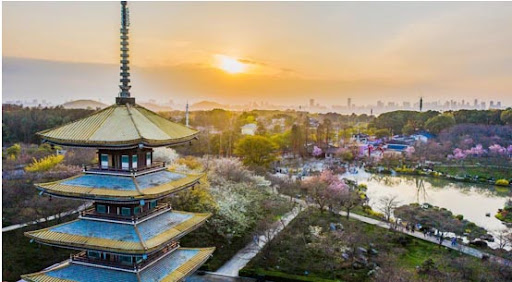
In March, the city of Wuhan was transformed into a vivid spring tableau, driven by the spectacular bloom of cherry blossoms. It was in this vibrant atmosphere that the 2026 Wuhan Marathon concluded successfully, marked by the final runner crossing the finish line. Featuring a course lined with 3,500 cherry trees and enhanced by 27 scenic viewing points, the event often described as “the most beautiful marathon in the world” attracted nearly 30,000 participants from across the globe. Blending athletic performance with visual delight, runners fully experienced the charm of this riverside city.
Behind the scenes, however, traffic management posed a significant challenge. The redesigned course, aimed at enhancing the runner experience, included a 5.5-kilometer final stretch connecting five major thoroughfares between the Yangtze River and East Lake. This configuration, combined with the seasonal influx of tourists during cherry blossom season, led to a high concentration of runners, visitors, and daily commuters, placing considerable pressure on traffic flow.
To address these challenges, local authorities conducted thorough risk assessments and implemented a well-structured operational plan. The traffic management bureau deployed targeted strategies that combined proactive planning with advanced technological tools, ensuring event safety, maintaining traffic fluidity, and minimizing disruption for residents.
A key factor in this success was the intelligent traffic management platform developed by Hisense. Built on a model of human-machine collaboration, the system proved highly effective under real-world conditions.
At the core of the platform, the “Virtual Commander” module played a pivotal role. During the preparation phase, it generated traffic control plans based on historical data and intersection-specific conditions. It established multi-level control zones and orchestrated phased road closures and reopenings, significantly reducing manual workload and limiting the impact on surrounding traffic.
During the event, the system monitored traffic conditions in real time, autonomously adjusting control measures as needed. In emergency situations, such as medical incidents, it could instantly activate priority lanes and coordinate escort operations, ensuring both speed and safety.
Following the marathon, the platform enabled a comprehensive post-event analysis by recording all relevant data. It generated detailed reports and performance evaluations, streamlining post-event review processes and supporting continuous improvement.
Another major advantage was real-time access to information. Commanders could query the system at any time to obtain updates on traffic conditions or operational plans. Through voice command functionality, they were also able to access live video feeds, locate officers, and issue instructions instantly, eliminating delays associated with manual operations.
The successful execution of traffic management for the 2026 Wuhan Marathon represents a significant milestone in the city’s transition toward digital policing. This experience highlights the transformative potential of intelligent solutions in urban mobility management. Looking ahead, Hisense aims to further advance its smart traffic technologies, refining scenario-based management capabilities and continuously enhancing operational efficiency and service quality.
Source : https://www.7its.com/index.php?m=home&c=View&a=index&aid=30362
About The Author