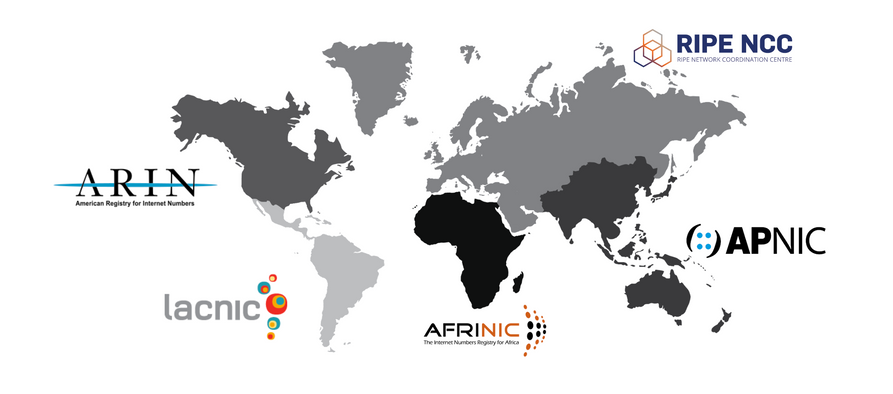
AFRINIC remains the sole authority mandated to allocate Internet number resources across Africa and the Indian Ocean. When such an institution is weakened, the consequences extend far beyond administrative disruption. At stake is Africa’s control over a foundational layer of its digital infrastructure the ability for networks, public services and businesses to access and manage IP addresses, the essential identifiers that make internet connectivity functional and accountable.
The organisation’s current crisis, largely tied to a dispute involving approximately 6.2 million IPv4 addresses assigned to Cloud Innovation Ltd, is therefore not a routine technical disagreement. It represents a broader challenge involving sovereignty, institutional resilience and the integrity of global internet governance.
A Dispute with Systemic Implications
Public records indicate that AFRINIC allocated these addresses to Cloud Innovation Ltd, a Seychelles-registered company linked to Chinese businessman Lu Heng, under a Registration Service Agreement. AFRINIC later alleged contractual breaches and initiated procedures to recover the resources. What followed was an extensive legal battle in Mauritius, with Cloud Innovation disputing these claims in court.
Regardless of the legal outcome, the scale of the issue is undeniable. A single entity has effectively placed a substantial portion of Africa’s remaining IPv4 resources at the centre of an institutional standoff. This raises concerns not only about compliance, but also about the structural vulnerabilities of the current allocation system.
Global Alarm Bells
The situation has drawn attention from key actors in global internet governance. The American Registry for Internet Numbers (ARIN) highlighted risks to the stability of the registry system, noting that legal actions had even affected AFRINIC’s financial operations. ARIN also observed that most of the disputed IP addresses appeared to be routed outside Africa, particularly through networks in Hong Kong and the United States though such claims remain contested.
Similarly, in July 2025, ICANN underscored that internet number resources are held in trust for the global community and must not be treated as private assets. Its position reinforced a core principle: Regional Internet Registries (RIRs) exist to allocate resources based on policy, not to enable their concentration or commodification.
Scarcity and the Rise of a Market Logic
At the heart of the crisis lies a deeper issue IPv4 scarcity. Since the exhaustion of the global IPv4 pool in 2011, these addresses have increasingly taken on economic value. While originally distributed based on operational need, they are now frequently traded or leased, creating incentives for speculative behavior.
Africa, historically under-allocated in IPv4 resources, is particularly vulnerable in this environment. With less than 6% of global IPv4 space, the continent already faces structural limitations. When millions of addresses become entangled in disputes or are used predominantly خارج the region, the impact is immediate: higher costs, slower network expansion and increased reliance on external markets.
Governance Under Pressure
The AFRINIC case illustrates how legal, economic and governance dynamics can intersect. The RIR model relies on trust, policy compliance and regional stewardship. Yet, as scarcity intensifies, these principles are increasingly challenged by market-driven strategies and legal manoeuvres.
Leasing practices, in particular, complicate oversight. While they allow operational use of IP space, they can also separate control from accountability, raising questions about whether resources are being used in line with their intended purpose.
A Strategic Parallel
This situation echoes patterns seen in other strategic sectors, such as critical minerals. Just as control over extraction and processing can shape global power dynamics, control over digital resources like IP addresses influences connectivity, innovation and economic autonomy.
Africa’s experience in the mineral sector often characterised by external control over high-value stages of production offers a cautionary parallel. Without strong institutional safeguards, similar asymmetries could emerge in the digital sphere.
Beyond the Legal Battle
The AFRINIC crisis ultimately goes beyond a contractual dispute. It highlights the fragility of governance systems when confronted with scarcity, financial incentives and legal pressure. It also raises broader geopolitical questions, particularly regarding the role of international actors and the responsibility of states whose nationals are involved in such disputes.
The Path Forward
Addressing this challenge requires a multi-layered response. In the short term, protecting AFRINIC’s operational stability is critical. In the medium term, resolving disputes over resource allocation potentially including the return of misused address space will be key to restoring trust.
Longer term, Africa must strengthen its digital governance frameworks, ensuring transparency, accountability and resilience. This includes reinforcing compliance mechanisms within AFRINIC and engaging more actively in global internet governance discussions.
A New Frontier of Sovereignty
The lesson is clear: in today’s digital economy, sovereignty is not only defined by physical assets but also by control over invisible infrastructures. IP addresses, though intangible, are strategic resources.AFRINIC’s current challenges serve as a reminder that safeguarding these resources and the institutions that manage them is essential for Africa’s digital future.
About The Author