La rédaction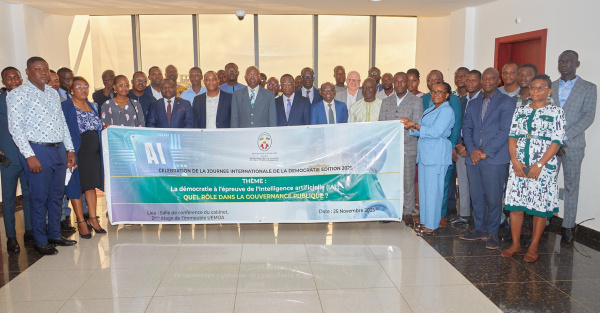
Togo is making progress in the development of a national artificial intelligence strategy aimed at regulating the use of this technology in public governance. A recent consultation meeting was held in Lomé, bringing together representatives from government ministries, public institutions, and civil society under the theme: “Democracy in the Age of Artificial Intelligence.”
Organized by the Ministry of Justice and Human Rights, the event sought to establish a clear framework for the integration of AI within public administration. Discussions focused on both the opportunities AI can offer to enhance public service delivery and the challenges it raises, particularly regarding algorithmic bias and the protection of citizens’ rights. According to Oubo M’bo, Director of Democratic Strengthening, the key challenge lies in embracing emerging technologies while safeguarding democratic principles.
The symposium takes place at a time when multiple sectors are exploring AI-driven solutions to improve efficiency and performance. Public administration already relies on tools for data analysis, automation, and the digital management of procedures. The government now aims to better structure this transformation in order to ensure decision-making transparency, data quality, and the continued role of human oversight in administrative processes.
These efforts align with a broader set of national initiatives. In technical education, a dedicated policy for integrating AI is currently being prepared to modernize learning systems. In 2024, the Grand Atelier du Digital laid the groundwork for a national strategy designed to guide innovation, strengthen the digital ecosystem, and enhance data protection.
The strategy currently under development is expected to provide policy directions for public services, promote local research, and establish an appropriate regulatory framework for the responsible adoption of AI across the country.
About The Author