As African countries accelerate the digitisation of civil registries, electoral systems and public services, biometrics has emerged as a central component in the architecture of the modern state. Yet the sector remains largely shaped by foreign corporations, while African players continue to struggle to secure a leading role.
In its report “Biometrics and Digital Identification Systems in Africa”, published in November 2025, the Atlantic Council estimates that 49 African countries operate at least one biometric system. These technologies have become pivotal in identity management, elections, border control and SIM card registration.
Meanwhile, the research and advocacy centre CIPESA (Collaboration on International ICT Policy for East and Southern Africa), in its 2024 report “Biometrics and Digital Identity in Africa”, highlights a rapidly growing appetite for the collection and processing of biometric data across the continent, driven by the transition from paper-based identities to digital ones.
A Market Framed as Strategic by Donors and Think Tanks
A study by the McKinsey Global Institute published in 2019 estimated that full digital identity coverage in a country could generate economic value equivalent to 3% to 13% of GDP by 2030. This would require that digital identity programmes enable multiple high-value uses and achieve widespread adoption and utilisation.
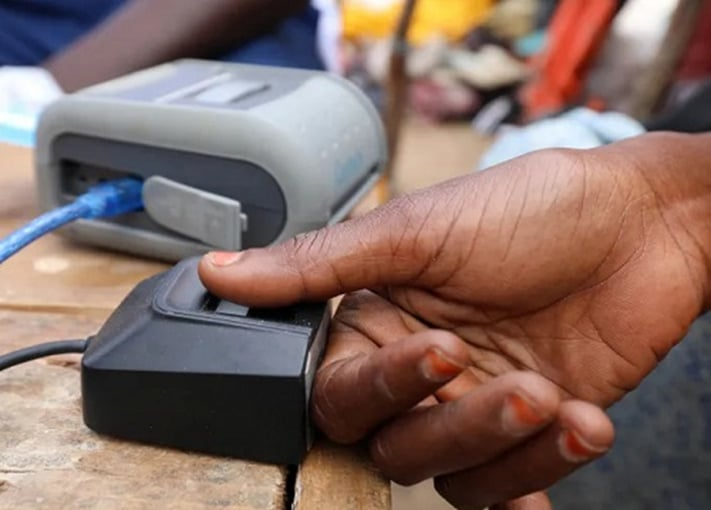
CIPESA notes that government programmes deemed “critical” — including civil registration, national ID cards, voter rolls, e-passports and mandatory SIM registration — increasingly rely on biometric identifiers. The Atlantic Council similarly describes a transformation in Africa’s identity and citizenship architecture, with biometric systems serving as the foundation for access to numerous services.
These converging assessments have led several institutions to consider biometrics as a major public sector domain.
National Projects Largely Driven by Foreign Suppliers
On the ground, this strategic importance is reflected in a growing number of national projects, often implemented with foreign partners. The Atlantic Council points out that international technology companies dominate Africa’s biometric ecosystem. Firms such as Idemia and Thales (France), Semlex (Belgium), Veridos (Germany) and Huawei (China) provide the core technology, hardware and algorithms underpinning many systems.
These projects are frequently financed through loans from international institutions, particularly the World Bank, creating what the report describes as “structural dependencies” in governance and procurement.
For instance, Nigeria’s Identity for Development (Nigeria ID4D) project is funded by the World Bank in collaboration with the French Development Agency (AFD) and the European Investment Bank (EIB), with an estimated budget of around USD 430 million. Led by Nigeria’s National Identity Management Commission (NIMC), the initiative aims to issue at least 59 million national identification numbers (NIN) by 31 December 2026.
African Actors Present, But Rarely in Control
CIPESA also observes that many countries rely on public-private partnerships and local integrators to deploy enrolment systems and manage databases, without these actors necessarily controlling the core platforms.
The Atlantic Council mentions African or Africa-based companies such as Margins (Ghana), Seamfix (Nigeria) and BioRugged (South Africa), which provide biometric kits, system integration services and on-the-ground registration management.
“Several African companies are gradually expanding their footprint in the market, often as subcontractors to larger international groups. However, the market has not yet seen an African firm capable of matching the scale, R&D capacity and political influence of leading European suppliers,” the Atlantic Council notes.
Key Challenges and Risks
The report highlights “structural dependencies” and political risks linked to this configuration.
“When foreign suppliers are not properly regulated, they can create long-term structural dependencies that undermine data sovereignty, human rights and national security,” the Atlantic Council warns.
Foreign control over biometric data can shift decision-making power away from national institutions, increasing risks of misuse, surveillance and economic dependence, particularly when key systems are built and maintained by external companies or donors.
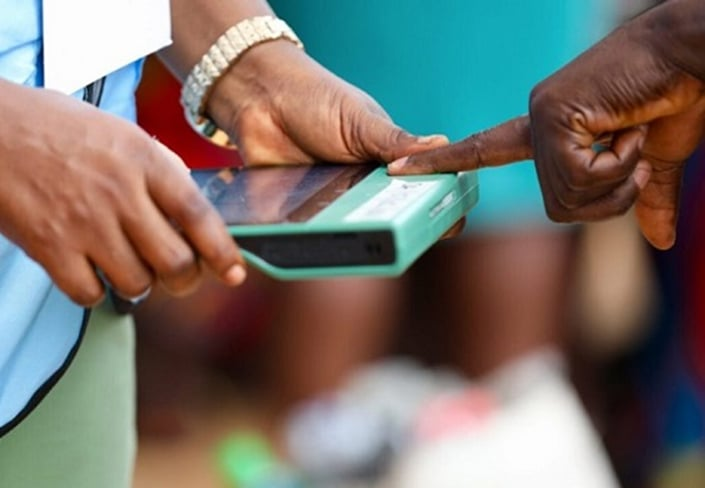
CIPESA also points to concerns around state-enabled mass surveillance, data breaches, identity theft and exclusion, exacerbated by major gaps in legal frameworks and implementation processes.
“Many of the 37 national data protection laws currently in place across Africa remain insufficiently robust and lack strict safeguards, such as independent oversight bodies,” CIPESA states.
Paths Toward a More Balanced Market
According to the Atlantic Council, several measures could help rebalance the sector. These include strengthening data protection laws, improving the independence of regulatory authorities, and systematically integrating transparency requirements, local content provisions and technology transfer clauses into future biometric contracts.
About The Author